

When You feel Stuck In Therapy and Why It Didn’t Help
Walking into therapy takes courage.
Walking away feeling like it didn't help can feel devastating.
Maybe you spent months talking about your past but still felt anxious every day. Maybe you kept hearing the same advice over and over but never felt different. Maybe you left sessions wondering, "Is therapy just not for me?"
If that's where you are, I want you to know something important:
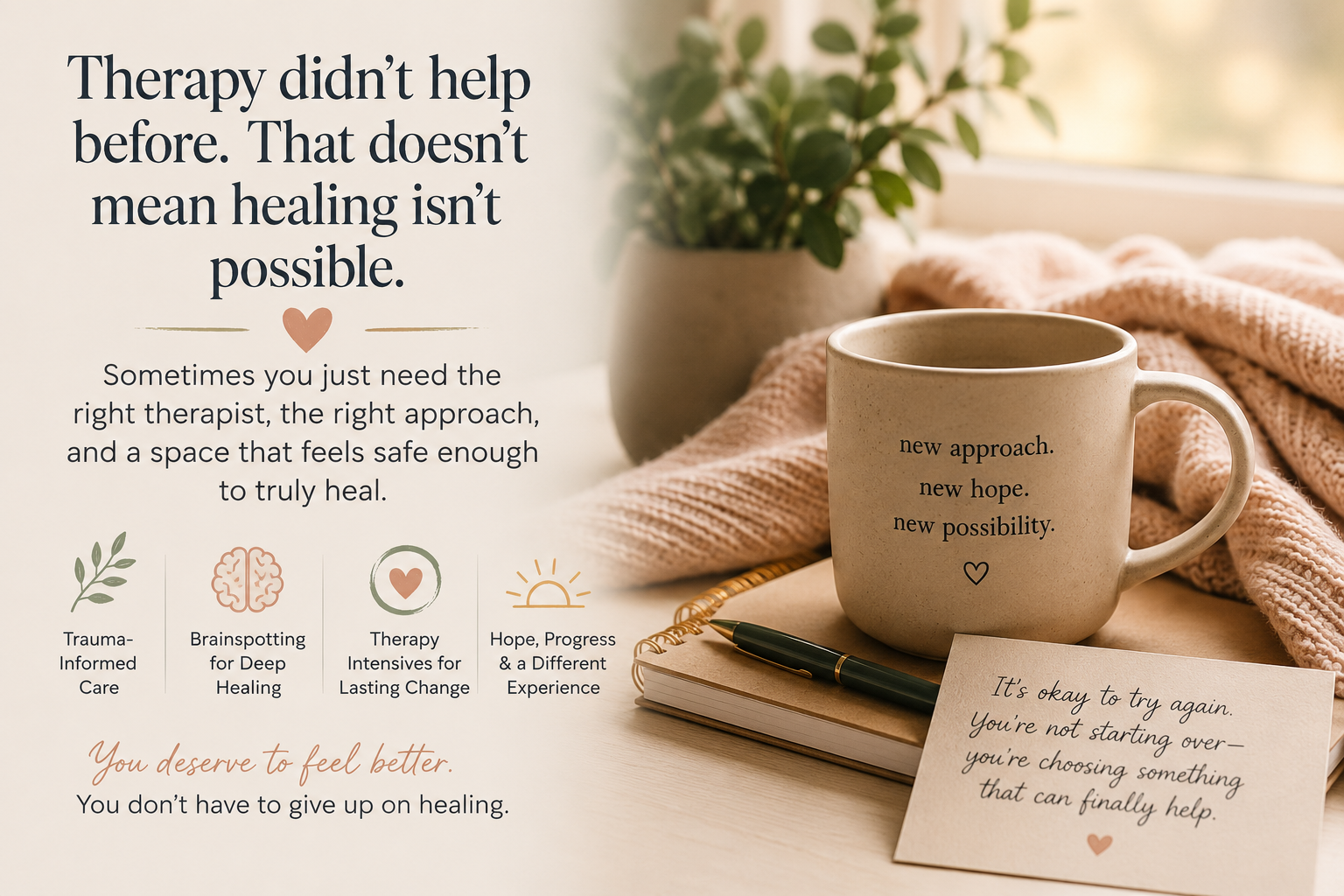
Just because therapy didn't help before doesn't mean therapy can't help.
Many people who eventually experience meaningful healing have a history of feeling disappointed by previous counseling. If you're feeling stuck in therapy—or you've stopped going because it never seemed to make a difference—that doesn't mean you're broken or "too difficult" to help.
It may simply mean you haven't found the right therapist, the right approach, or the right format for what your brain and nervous system need.
TL;DR
If you've tried therapy before and walked away feeling like it didn't help, you're not alone—and it doesn't mean you're beyond help. Sometimes the therapist wasn't the right fit. Sometimes the approach didn't address what you truly needed. And sometimes trauma requires a different kind of healing than simply talking about what happened. Finding the best therapist and the right approach can make all the difference. Therapy intensives, Brainspotting, and trauma-informed care that includes nervous system regulation can create a very different experience than you've had in the past.
Why Therapy Sometimes Doesn't Feel Helpful Or You Feel Stuck In Therapy
There are many reasons someone might leave therapy feeling discouraged, and most of them have nothing to do with a lack of effort.
You Never Felt Truly Safe
Healing requires safety.
If you spent sessions worrying about being judged, misunderstood, or rushed, your nervous system may never have settled enough to do deeper work.
Feeling emotionally safe isn't a bonus—it's the foundation of effective trauma therapy.
You Didn't Feel Understood
One of the strongest predictors of successful therapy isn't a specific technique.
It's the relationship.
If you constantly felt like you had to explain yourself, defend your experiences, or convince your therapist that your pain was real, it's understandable that therapy didn't feel helpful.
You deserve to work with someone who listens carefully, believes your experiences, and helps you make sense of them.
Talk Therapy Wasn't Enough
For many people, talking brings awareness.
But awareness doesn't always create change.
You might completely understand why you're anxious, overwhelmed, or emotionally reactive—and still find yourself stuck in the same patterns.
This is especially common for people with trauma.
Trauma isn't stored only as memories or thoughts. It also affects the nervous system and the body. If therapy focuses only on thinking differently without helping your nervous system process what it's been carrying, you may continue feeling stuck despite your insight.
The Pace Didn't Match What You Needed
Sometimes therapy moves so slowly that it feels like you're revisiting the same conversation every week.
Other times it moves too quickly before enough trust has been built.
Neither experience feels good.
Healing isn't about rushing, but it also shouldn't feel like you're spending months circling the same issues without making progress.
Finding the right pace is part of finding the right therapist.
The Approach Wasn't the Right Fit
There isn't one therapy approach that's best for everyone.
Some people benefit from Cognitive Behavioral Therapy (CBT).
Others need approaches that work more directly with the nervous system and deeper emotional processing.
Some people thrive in traditional weekly sessions.
Others experience much more progress through therapy intensives that allow enough uninterrupted time to work through complex issues without stopping just as they begin opening up.
Needing something different doesn't mean you've failed therapy.
It means you're still learning what helps you heal.
What People Often Need Instead
Many clients come to me after saying things like:
"I've been in therapy for years."
"I know why I do this, but nothing changes."
"I feel like I'm just talking."
"I don't want to start over with another therapist."
Those feelings make sense.
What many people actually need isn't more therapy.
They need therapy that's better matched to how trauma affects the brain and nervous system.
That often includes:
A therapist who specializes in trauma therapy rather than offering it as one of many services.
A strong therapeutic relationship where you feel safe enough to be honest.
Treatment that includes nervous system regulation, not just insight.
An approach that helps process experiences instead of only discussing them.
A pace that respects both your readiness and your goals.
The option of therapy intensives when weekly sessions haven't provided enough momentum.
When these pieces come together, therapy often feels very different.
How We Can Create a Different Experience
At Creating Changes Counseling, I work with adults who are tired of feeling stuck.
Many of my clients aren't new to therapy—they're people who've tried before and are looking for something that feels more effective.
My approach combines evidence-based treatment with trauma-informed care that recognizes healing involves both the mind and the nervous system.
One of the primary approaches I use is Brainspotting.
Brainspotting is a brain-body therapy that helps access and process experiences that may be difficult to fully reach through conversation alone. Rather than focusing only on analyzing thoughts, Brainspotting helps the brain and nervous system process unresolved experiences at a deeper level.
Many clients describe feeling like they're finally getting to the root of issues they've talked about for years.
For people who want more focused work, I also offer therapy intensives.
Instead of spreading healing across months of one-hour sessions, therapy intensives provide dedicated time to dive deeply into the concerns that matter most. Many people appreciate having enough uninterrupted time to build momentum, make meaningful progress, and leave feeling like they've accomplished more than they expected.
Whether we work together through weekly trauma therapy or a therapy intensive, my goal is the same:
To create a space where you feel heard, understood, supported, and equipped with approaches that help your nervous system move toward healing—not just understanding.
Because therapy shouldn't feel like you're endlessly repeating your story.
It should help you begin living differently.
You Don't Have to Give Up on Healing
If therapy didn't help in the past, it's understandable if you're hesitant to try again.
But one disappointing experience—or even several—doesn't determine what's possible for you.
Healing isn't about finding a perfect therapist.
It's about finding the best therapist for you—someone whose approach, personality, and training fit what you need at this stage of your life.
If you've been feeling stuck in therapy or wondering whether healing is possible, I want you to know there are other approaches worth exploring.
You deserve therapy that helps you feel understood, supported, and hopeful about the future.
If you're curious whether trauma therapy, Brainspotting, or a therapy intensive could offer a different experience than you've had before, I'd be honored to talk with you. Schedule a free 15-minute consultation, and together we can explore what healing could look like for you.
About the Author
Krissy White is a Licensed Professional Counselor serving adults throughout Texas and Illinois through Creating Changes Counseling. With over 14 years of clinical experience, she specializes in helping adults heal from anxiety, trauma, low self-esteem, and the lasting effects of difficult life experiences. Krissy uses evidence-based approaches, including Cognitive Behavioral Therapy (CBT), along with Brainspotting to help clients move beyond insight and experience meaningful, lasting change. She offers both weekly therapy and therapy intensives, providing compassionate, personalized care in person in Katy, Texas, and virtually throughout Texas and Illinois.